
How to Pray for Someone, the Way Paul Did
How to pray for someone, in short: say their name to God, ask for one specific good thing for them, thank God for them and leave the answer with him. Then keep going; a minute a day is enough. Paul prayed this way for the Christians of Ephesus, “making mention of you in my prayers” (Ephesians 1:16), and told Timothy, whom he left in Ephesus, to pray “for all men.”
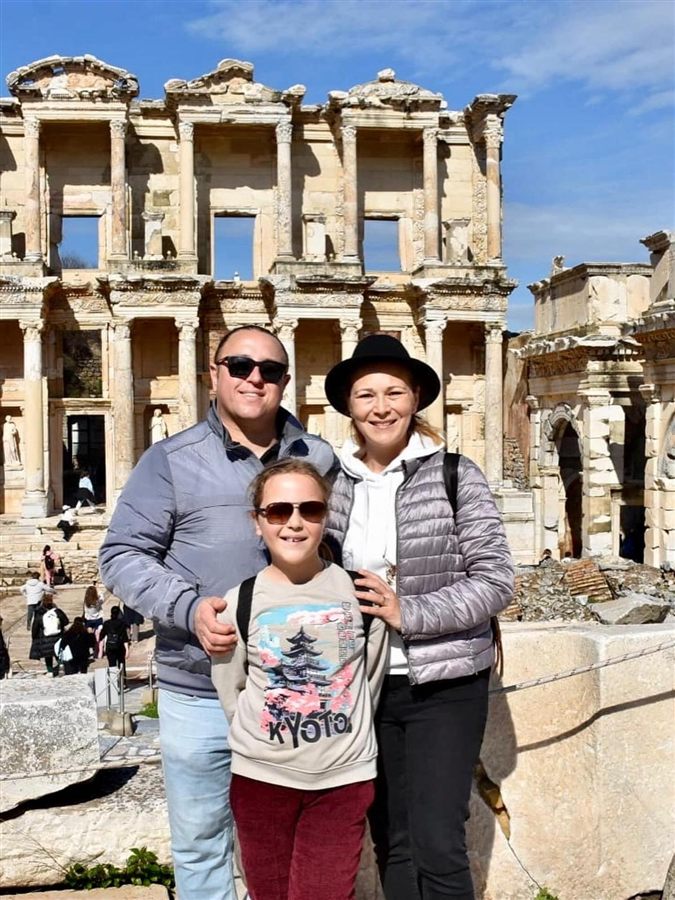
Written by Hasan Gülday · the Gülday family, Ephesus
On this page: The short answer · Paul and Timothy · Four steps · Prayers by need · How long · Send their name
How do you pray for someone else?
Say the person’s name to God, tell him what they are facing, and ask for one specific good thing for them: healing, peace, work, faith. Thank God for them, then leave the answer with him. Do it again tomorrow. You need no special words, no permission and no shared faith.
That is the whole of it, and Christians have prayed for one another this way since the first churches. This page is about the praying itself: the pattern Paul used for the people of Ephesus, a one-minute prayer you can fill in, and words for the hard cases, from a friend in hospital to someone who hurt you. If you want to know what to write when you send a prayer for someone to the House of Virgin Mary, our page on sending a prayer for someone else covers names, privacy and examples.
How Paul prayed for the people of Ephesus
Paul knew the church in Ephesus well. He lived and taught in the city for about three years (Acts 20:31), and when he wrote to it, he started with the people, not their problems: “having heard of the faith in the Lord Jesus which is among you… don’t cease to give thanks for you, making mention of you in my prayers” (Ephesians 1:15–16). Making mention means naming. Paul held particular people in mind, thanked God for them, and only then asked: for wisdom, for open eyes, for strength inside (1:17–18, 3:16). Our page on Paul’s prayers in Ephesians prays those two prayers line by line.
He also left someone in Ephesus to keep praying. “As I urged you when I was going into Macedonia, stay at Ephesus,” he reminds Timothy (1 Timothy 1:3), and the first practical instruction in that letter is about praying for other people:
I exhort therefore, first of all, that petitions, prayers, intercessions, and givings of thanks be made for all men, for kings and all who are in high places, that we may lead a tranquil and quiet life in all godliness and reverence.
1 Timothy 2:1–2 · World English Bible“First of all” puts this prayer ahead of everything else in the life of the church. “All men” means everyone, including rulers the young church had not chosen. A few lines later Paul adds the manner: “lifting up holy hands without anger and doubting” (1 Timothy 2:8). The church historian Eusebius, writing in the early 300s, records that Timothy was the first bishop of Ephesus (Church History 3.4), so these lines on prayer were written for the man who would lead the church of that city.

How to pray for someone in four steps, from 1 Timothy 2:1
Paul uses four different words in that verse: petitions, prayers, intercessions and thanksgivings. The words overlap, and he may simply be piling them up to say “every kind of prayer.” Read as four steps, though, they give a simple shape for praying for one person, and the whole thing takes about a minute.
1. Petition: name the person and the need
Start with their name and what they are facing, as plainly as you would tell a friend. When Lazarus fell ill, his sisters sent Jesus one sentence: “Lord, behold, he for whom you have great affection is sick” (John 11:3). They named him, named the need and did not tell Jesus what to do. Their message is recorded in the Gospel of John, which, according to Irenaeus in the second century, John published “during his residence at Ephesus in Asia” (Against Heresies 3.1.1).
Pray it: Lord, I bring Ana to you. You know what she is facing this week.
2. Prayer: bring the whole person, not only the problem
A need is one part of a life. Picture the person as they are: their work, their family, what makes them laugh and what keeps them awake. Paul’s prayers for the Ephesians ask for things no diagnosis covers, such as hope and the knowledge of being loved (Ephesians 1:18, 3:18–19).
Pray it: Hold all of her, Father: her body, her worries, her family and her faith.
3. Intercession: ask for one specific good
Then ask for something particular. On the night before the crucifixion, Jesus told Peter, “I prayed for you, that your faith wouldn’t fail” (Luke 22:32). One named man, one specific request, prayed ahead of the hardest night of his life. Specific prayers are easier to keep praying, and it is easier to notice when they are answered. If you do not know what to ask, ask for what you would want in their place.
Pray it: Give her a calm night before the scan, and doctors who take time to listen.
4. Thanksgiving: thank God for them
Paul thanked God for people before he asked anything for them (Ephesians 1:16), and thanks changes the way you see the person you pray for. Name one thing you are glad of in them. For more of his thanks, see our prayers of thanksgiving from Paul.
Pray it: Thank you for Ana, for her kindness and for every year of our friendship. I leave her with you. Amen.
Put together, the four steps make a prayer you can say for anyone in about a minute. Fill in the blanks:
Father, I bring ______ to you. You know what they are facing: ______. Hold all of them, body, mind and heart. Please give them ______. Thank you for ______, and for every good thing in them. I leave them in your hands, and I trust you with what I cannot fix. Amen.
A one-minute prayer for someone, after 1 Timothy 2:1Prayers for someone who is sick, anxious, far from faith or hard to forgive
Some situations make the words harder to find. Here is what to ask for in five of them, with a short prayer for each. Put in the person’s name where you see one.
For someone who is sick or having surgery
Ask for healing plainly; the Bible does not ask anyone to be shy about it. Then widen the prayer: strength for the person, clear heads and steady hands for the doctors and nurses, rest for the family who sit and wait. Be honest with God, too, because not every prayer for healing ends the way we ask. Paul’s friend Epaphroditus “was sick nearly to death, but God had mercy on him” (Philippians 2:27), yet in another letter Paul writes, “I left Trophimus at Miletus sick” (2 Timothy 4:20), and Trophimus was a man from Ephesus (Acts 21:29). Prayer is how we stay with someone whatever the news.
Lord, Daniel goes into surgery tomorrow. Please heal him. Guide the hands of every doctor and nurse in that room, and give his family rest while they wait. Thank you for his kindness to everyone he meets. Whatever the news, keep him close to you. Amen.
For someone who is sick
For someone who is anxious, depressed or lonely
Anxiety and loneliness shrink the world to one room. Pray for peace in the words Paul used to close a letter: “Now may the Lord of peace himself give you peace at all times in all ways” (2 Thessalonians 3:16). Then let the prayer move your feet: send the message, make the call, knock on the door. A lonely person may not know they were prayed for, but they will notice a visit. If you fear someone may harm themselves, prayer does not replace getting help today: contact emergency services or a crisis line where you live, and stay with them if you can.
Lord of peace, give Sarah peace tonight, at all times and in all ways. Quiet the thoughts that will not let her sleep. Show me one thing I can do for her this week, and give me the courage to do it. Amen.
For someone who is anxious or lonelyFor someone with an addiction
Pray for today, not for the whole road at once: one sober day, one honest conversation, one appointment kept. Pray for the doctors, counselors and groups who are helping. And pray for yourself, because loving someone through an addiction is exhausting. Ask for patience, for wisdom about boundaries, and for the grace to keep hoping without keeping score.
Father, give Marcus strength for today, just today. Make him honest with himself and with the people who are helping him. Give me patience, clear boundaries and a heart that does not give up on him. Amen.
For someone with an addictionFor someone far from faith
Paul prayed for people who did not share his faith with a longing he did not hide: “my heart’s desire and my prayer to God is for Israel, that they may be saved” (Romans 10:1). Pray for them, not at them. Ask God to show them his love in a way they can recognize, and keep your friendship free of conditions. The best-known example is a mother: Saint Monica prayed and wept for her son Augustine for years, and he later wrote that a bishop told her, “it is not possible that the son of these tears should perish” (Confessions 3.12). Augustine became one of the great teachers of the Church.
God, I bring Elena to you. Show her your love in a way she can recognize, in your time and not mine. Thank you for her friendship. Help me love her well, whatever she believes. Amen.
For someone far from faithFor someone who hurt you
This is the hardest one, and Jesus asks it plainly: “bless those who curse you, and pray for those who mistreat you” (Luke 6:28). He did it himself on the cross: “Father, forgive them, for they don’t know what they are doing” (Luke 23:34). Writing to the Ephesians, Paul ties forgiveness to what we have already received: “be kind to one another, tender hearted, forgiving each other, just as God also in Christ forgave you” (Ephesians 4:32). Start with one honest sentence. Praying for someone who hurt you is not the same as trusting them again, and it does not mean staying where you are being harmed.
Lord, I bring Thomas to you. You know what he did and how much it hurt. I am not ready to feel kindly toward him, but I ask you to do him good. Take the anger I cannot put down by myself. Amen.
For someone who hurt youFor someone who has died, the words are different; our prayer for a loved one who passed away has them.
How long should you keep praying for someone?
As long as they are on your heart. Jesus told a parable “that they must always pray and not give up” (Luke 18:1), and the prophet Samuel told his people, “far be it from me that I should sin against Yahweh in ceasing to pray for you” (1 Samuel 12:23). Paul names a friend who did exactly that: Epaphras, “always striving for you in his prayers” (Colossians 4:12). A few habits make it easier to keep going:
- Write the names down. A short list on a card or in your phone keeps a promise to pray from slipping away.
- Tie it to something you already do. The first coffee, the drive to work, switching off the light. A minute is enough.
- Note the date. When you look back months later, you will see answers you would otherwise have missed.
- Tell them, if it is welcome. “I prayed for you this morning” can be the kindest sentence someone hears all week.

Ask others to pray with you
Paul did not pray alone. He asked the Ephesians to pray for him too: “Pray for me, that utterance may be given to me in opening my mouth” (Ephesians 6:19). Asking others to join a prayer for someone is one of the oldest Christian habits, and the Catechism calls intercession “asking on behalf of another” (§2635). Catholic and Orthodox Christians also ask the Virgin Mary and the saints to pray, the way you would ask a friend; the Hail Mary ends “pray for us sinners, now and at the hour of our death.” The words are on our page of prayers to the Virgin Mary.

Last reviewed November 2026. Bible text from the World English Bible (public domain); sources linked below.
Send a prayer for them to Mary’s house
The last step of praying for someone can be a practical one. At the House of Virgin Mary, about 7 km from ancient Ephesus, visitors of every faith tie folded notes to the wishing wall, and many of the prayers people send us are for someone else. If you cannot go yourself, send a prayer to us: write their first name and one hope for them, up to 300 characters in any language, in the form on our home page. Our family places it on the wall on our regular visits to the house, free of charge. We do not promise a date, only that it is placed with care.
Before you send, ask whether they mind being named, and leave out an illness they have not shared. Our guide to sending a prayer for someone else explains what to write and what to leave out, and how to send a prayer request walks through each step.
Sources & further reading
- Ephesians 1:15–16: “making mention of you in my prayers” — Bible Gateway, World English Bible
- 1 Timothy 2:1–8: prayers and intercessions “for all men” — Bible Gateway, World English Bible
- 1 Timothy 1:3: “stay at Ephesus” — Bible Gateway, World English Bible
- Luke 22:32: “I prayed for you, that your faith wouldn’t fail” — Bible Gateway, World English Bible
- John 11:3: the sisters’ message about Lazarus — Bible Gateway, World English Bible
- 2 Timothy 4:20: Trophimus left sick at Miletus — Bible Gateway, World English Bible
- Colossians 4:12: Epaphras “always striving for you in his prayers” — Bible Gateway, World English Bible
- Eusebius, Church History, Book III, chapter 4: Timothy and the church in Ephesus — New Advent
- Irenaeus, Against Heresies 3.1.1: John’s Gospel published at Ephesus — New Advent
- Augustine, Confessions, Book III, chapter 12: Monica’s prayers — New Advent
- Catechism of the Catholic Church §2634–2636: the prayer of intercession — Vatican.va
The church historian Eusebius, writing in the early 300s, records that Timothy, the young man Paul told to pray “for all men” (1 Timothy 2:1), was the first bishop of Ephesus.
“I prayed for you, that your faith wouldn’t fail.”
Luke 22:32
People often ask
What do you say when you pray for someone? ▾
Their name, their need, one request and a thank-you. For example: “Lord, I bring Ana to you. She has a scan on Friday. Please give her calm and a clear result. Thank you for her friendship. Amen.” Short and specific is enough; you do not need special words.
Can you pray for someone without them knowing? ▾
Yes. Most prayers for other people are not mentioned to them. Tell them if you think it would comfort them; if they are private about their faith or their health, a prayer they do not hear about is still a prayer.
Do I have to share someone’s faith to pray for them? ▾
No. Paul told Timothy to pray “for all men” (1 Timothy 2:1), including rulers who did not share the Christian faith. You can pray for a friend of any faith or none. If you want to tell them, ask first, and respect the answer.
Why did Paul leave Timothy in Ephesus? ▾
To look after the young church there. Paul urged him to “stay at Ephesus” while he went on into Macedonia, so that Timothy could stop certain men from teaching “a different doctrine” (1 Timothy 1:3). The first practical instruction in the letter is prayer for everyone (2:1).
How do I send a prayer for someone? ▾
Write their first name and one hope for them in the form on our home page, up to 300 characters in any language. Our family places it on the wishing wall at the House of Virgin Mary near Ephesus on our regular visits, free of charge. Your own name goes in the name field.
Can I pray for someone who has died? ▾
Yes, in many Christian traditions, especially Catholic and Orthodox. A short prayer such as Eternal Rest is a good start. Our page with a prayer for a loved one who passed away has it, with a personal prayer to adapt.
What if nothing changes after I pray? ▾
Keep praying, and keep watching. Some answers come slowly and some look different from what was asked: Paul prayed for his friends, and still had to leave Trophimus sick at Miletus (2 Timothy 4:20). Praying also keeps you close to the person, and ready to help when you can.
Continue the story

A Prayer for Someone Else
How to send a prayer for a friend, a parent or a child, what to write, and why to ask before naming them.
Pray for them →
Paul’s Prayers in Ephesians
Two prayers from Ephesians 1 and 3, turned into a one-minute daily prayer for yourself or someone you love.
Keep reading →
Prayer Request Examples
Twelve short prayers for illness, family, work, exams, travel, grief and thanks, ready to copy.
See the examples →Say their name. We will carry it.
Write their first name and one hope for them. We will place your prayer on the wishing wall at the House of Virgin Mary near Ephesus, free of charge, in any language.
Send my prayer nowFree · No donations asked · Any language · Placed by our family in person